
Case Study - DocJacket: an AI platform for real estate transactions, built and run solo.
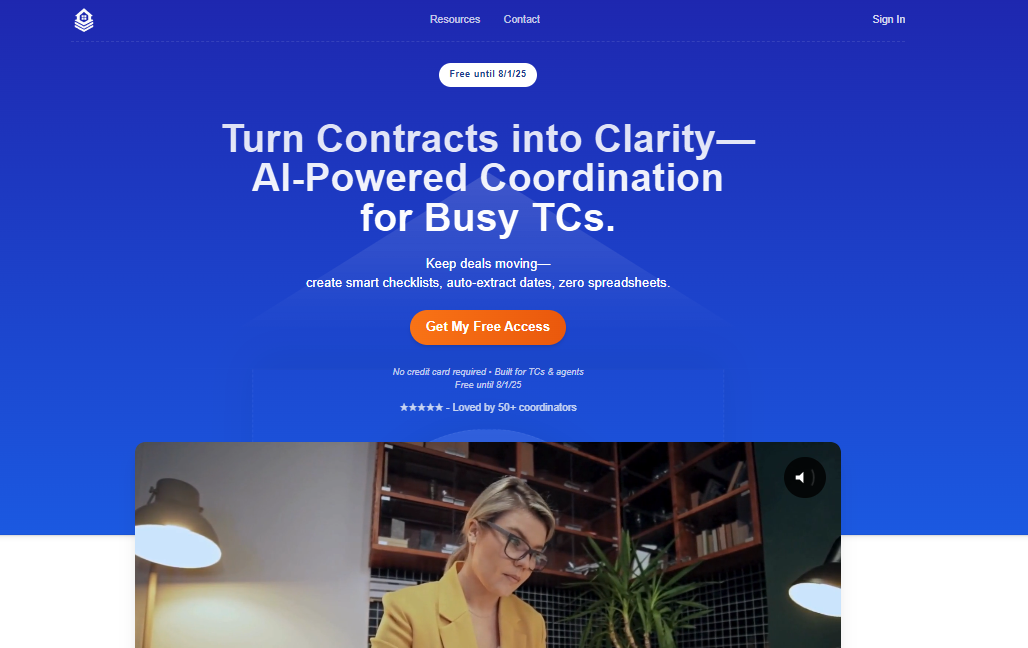
DocJacket reads real estate contracts, tracks every deadline, and lets AI clients work with transaction data through an MCP server. A person approves every change. I designed it, wrote it, deployed it and keep it running.
Problem
A real estate deal is a pile of documents and a calendar of deadlines spread across agents, buyers, sellers, lenders and title. Transaction coordinators keep it together by hand: they read each contract and addendum, copy dates and terms into spreadsheets, and chase people by email.
That work is slow and easy to get wrong, and a missed deadline can cost a deal. Generic AI tools don't help much here. Contract terms are specific to each state and brokerage, the data changes as amendments arrive, and nobody can afford a model quietly overwriting a closing date.
My Role
Solo founder and only engineer. I own the whole thing:
- 01 Architecture System design, data model, AI pipeline
- 02 Code API, web, mobile, marketing site
- 03 Deploy Containers, CI checks, releases
- 04 Ops Monitoring, incidents, cost
Architecture
One .NET 10 Web API sits behind three front ends. Long-running work like OCR, extraction and embedding runs in Hangfire jobs, so requests stay fast. The MCP server gives Claude and other AI clients a controlled set of tools over the same data. Grafana collects logs and metrics from all of it.
AI Systems
The rule running through all of these: the model proposes, something outside the model checks, and a person decides.
MCP server (46+ tools)
Claude and other AI clients can look up deals, deadlines, documents, email and calendar events, and they can draft changes too. Every write comes back as a preview, and nothing is saved or sent until the user approves it.
RAG over transaction documents
Users ask questions about a deal and get answers that cite the document and page they came from. Documents go through OCR, get chunked and embedded with Voyage AI into pgvector, and are retrieved with hybrid keyword and vector search plus a reranking pass.
Agent orchestration
Headless Claude agents run in isolated workspaces with bounded loops and explicit stop conditions. Their output is validated by checks outside the model, and every run is recorded in a run ledger for audit. The first workflow in production is nightly triage of the production logs.
Configurable extraction
Contract data comes out through structured outputs against a typed schema, and an evaluation suite catches regressions when a prompt or model changes. Users add their own fields with a one-line hint and no code.
Model routing
A mid-tier model handles extraction by default. Hard fields and low-confidence results get escalated to a frontier model, which brings frontier accuracy where it matters for about 1.1× the cost of running the mid-tier model alone.
Grounding and validation
When a new document disagrees with what the deal already holds, like an amended closing date or a changed price, DocJacket flags the conflict and asks the user. It doesn't overwrite the existing data.
Where it started
The first agent and function-calling work was in .NET with Semantic Kernel. I later moved to the Anthropic API directly, with MCP as the tool layer.
Results
- Real estate professionals using it
- 230+
- Lower per-document processing cost, from OCR model selection and page filtering
- ~85%
- Fewer LLM tokens
- 30–40%
- Monthly infrastructure, down from ~$3,100 on Azure
- <$100
Multi-tenant isolation isn't left to code review: custom Roslyn analyzers enforce it in CI.
Stack
- .NET 10
- C#
- Minimal APIs
- EF Core
- Hangfire
- PostgreSQL
- pgvector
- Angular
- TypeScript
- Next.js
- Expo / React Native
- Anthropic API
- Voyage AI
- Model Context Protocol
- Cloudflare R2
- Docker
- Caddy
- Linux VPS
- Grafana
- Roslyn analyzers
Building something with agents, RAG or MCP?
I'm open to AI Solutions Architect and AI engineering roles.